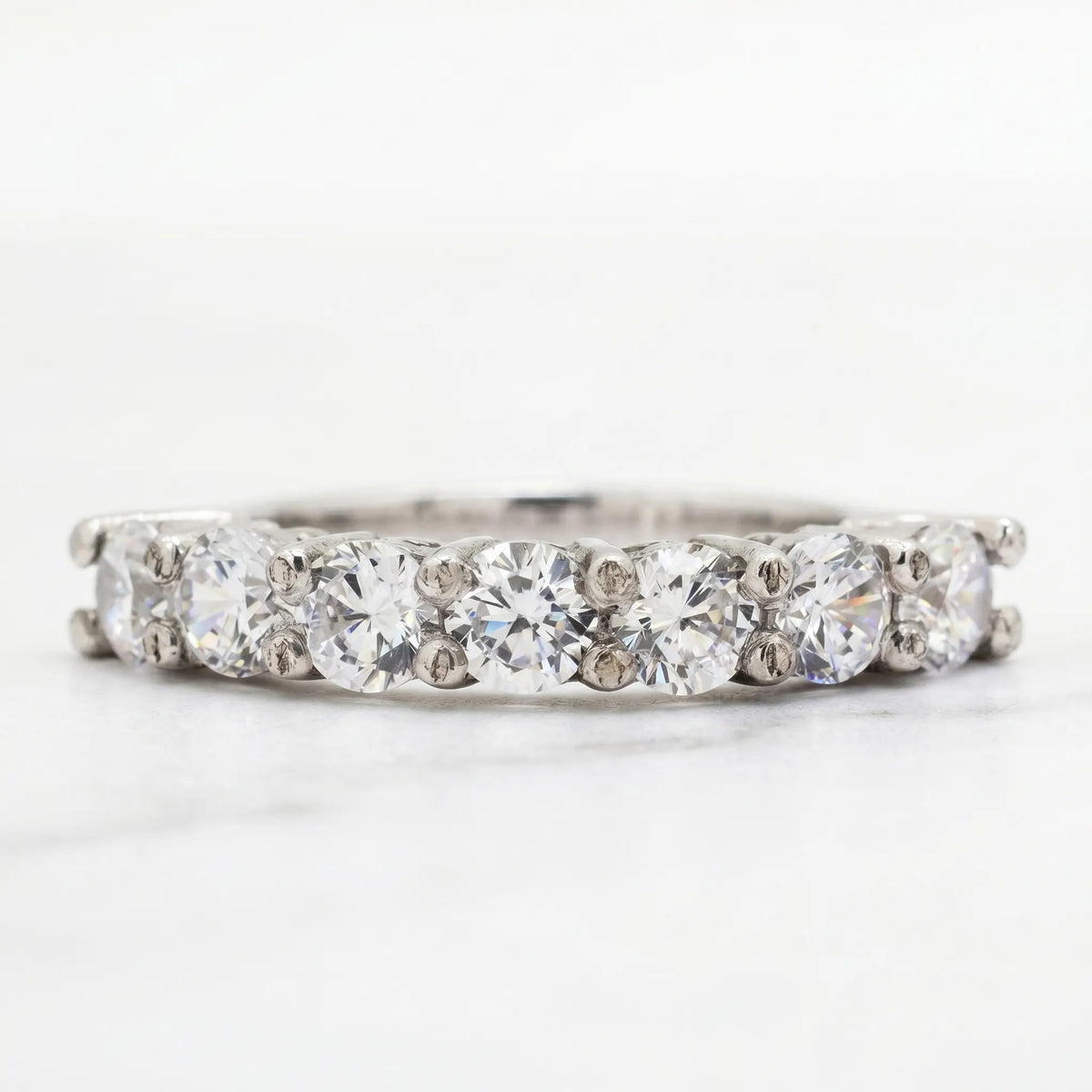
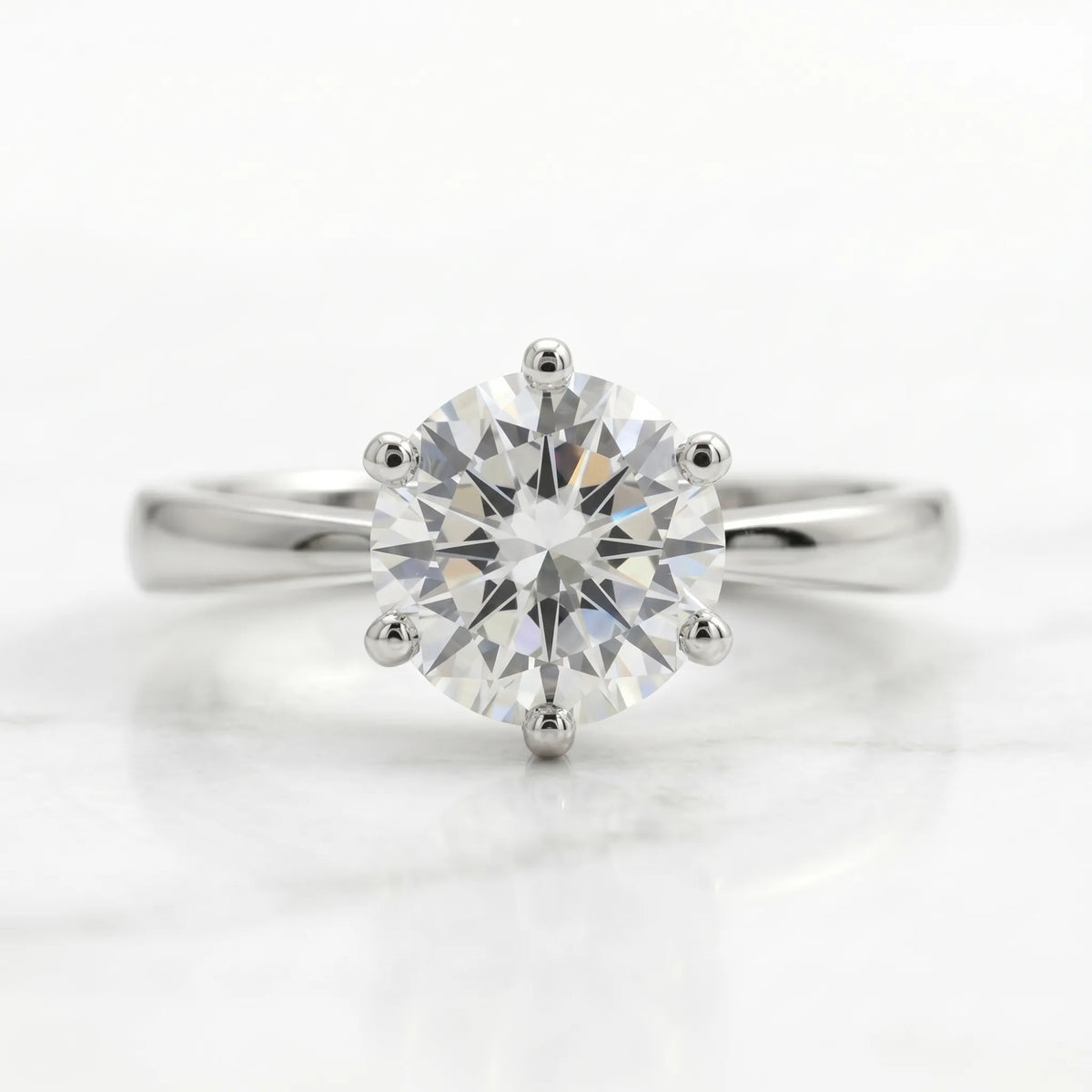
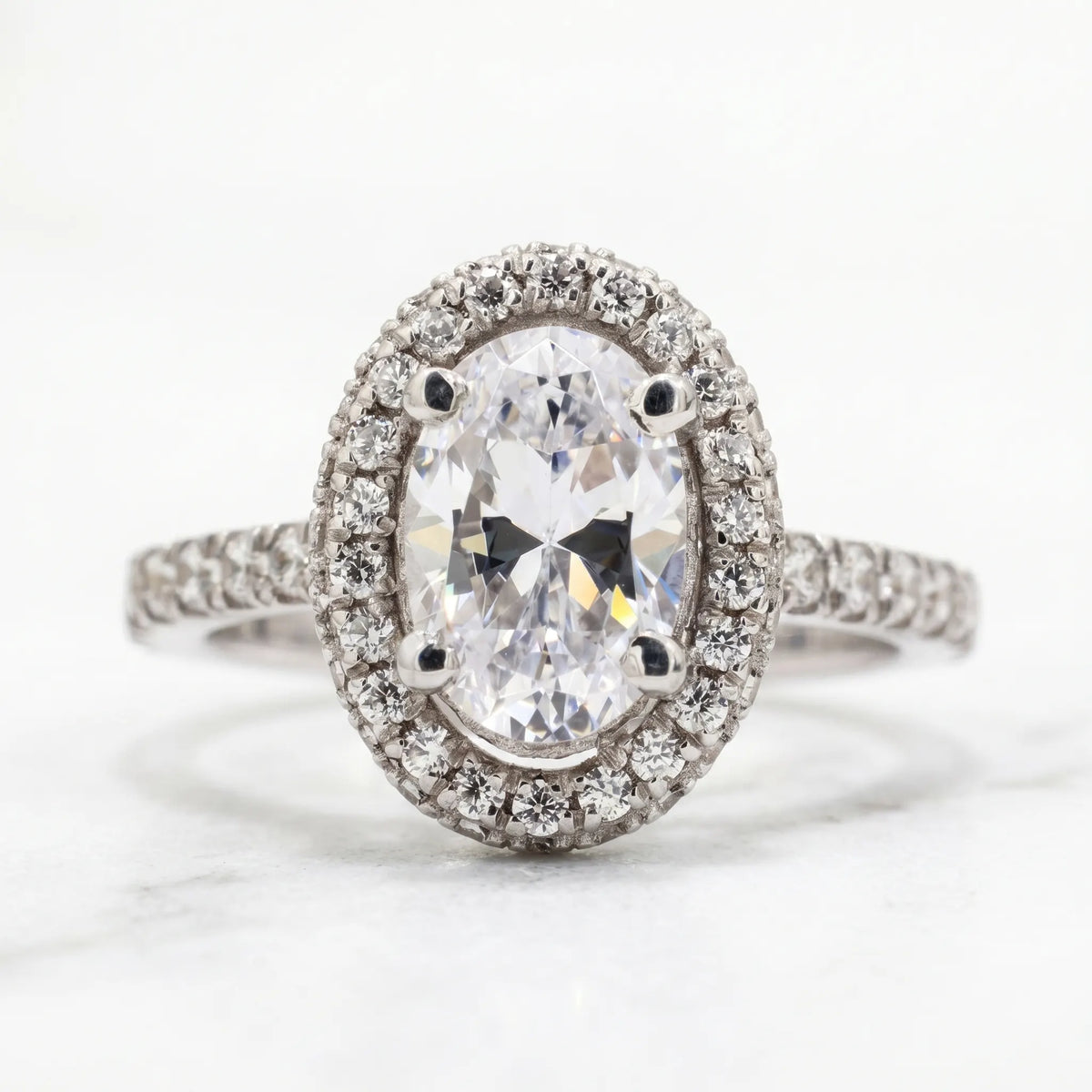
Finding the right ring size is an important step when buying an engagement ring, wedding band, or moissanite ring for everyday wear. A ring that fits correctly should slide over your knuckle with slight resistance and sit comfortably on your finger without feeling too tight or loose.
However, determining the correct ring size can be challenging, especially when purchasing a surprise gift for your partner. You may not know their exact size, and even if you do, factors such as finger shape, temperature, and ring design can affect the fit.
The good news is that you can learn how to measure ring size at home using a few simple tools. From measuring your finger with a paper strip to checking an existing ring against a size chart, several methods can help you find a suitable fit before placing an order.
This ring size guide explains how to measure your ring size, use a ring size chart, avoid common mistakes, and choose a comfortable fit for your moissanite jewelry.
Why Is Finding the Correct Ring Size Important?
Ring size affects both comfort and how securely your jewelry stays on your finger. A ring that is too loose may slip off, while one that is too tight can become uncomfortable and difficult to remove.
Getting the size right is particularly important when choosing a moissanite engagement ring or wedding band that you plan to wear regularly.
Consider these factors before selecting your size:
-
Comfort: Your ring should feel comfortable throughout the day without pinching your skin.
-
Security: A properly fitted ring is less likely to slip off during normal activities.
-
Ring design: Wide bands can feel tighter than narrow bands of the same size.
-
Finger shape: Your knuckle may be wider than the base of your finger, affecting how easily the ring slides on and off.
-
Resizing considerations: Some ring designs and settings may be more difficult to resize than others.
A well-fitted ring should pass over your knuckle with slight resistance and rest securely at the base of your finger.
How to Measure Ring Size at Home
You do not necessarily need to visit a jeweler to get an initial ring size measurement. The following methods can help you estimate your size at home.
1. Measure Your Finger With Paper or String

This method is useful if you do not already own a ring that fits the finger you want to measure.
What you need:
-
A thin strip of paper or non-stretchy string
-
A ruler with millimetre markings
-
A pen or pencil
Steps to follow:
-
Cut a narrow strip of paper or use a piece of non-stretchy string.
-
Wrap it around the base of the finger where you intend to wear the ring.
-
Make sure it feels comfortably snug without squeezing your skin.
-
Mark the point where the two ends meet.
-
Lay the paper or string flat and measure the marked length in millimeters.
-
Compare the measurement with a ring size chart to estimate your ring size.
The measurement you obtain represents your finger's circumference, not its diameter.
Important tip: String can stretch, twist, or compress, leading to inaccurate results. A paper strip or a flexible measuring tape with millimeter markings may provide a more consistent measurement.
Repeat the process two or three times. If your results differ, measure again before choosing a size.
2. Measure an Existing Ring
If you already have a ring that fits the intended finger comfortably, measuring it can be a convenient alternative.
Follow these steps:
-
Place the ring on a flat surface.
-
Use a ruler to measure the inside diameter across the widest point of the ring.
-
Measure from the inner edge to the opposite inner edge, excluding the metal band.
-
Record the measurement in millimeters.
-
Compare the inside diameter with a reliable ring size chart.
For better accuracy, use a digital caliper instead of an ordinary ruler.
Make sure the existing ring fits the same finger on the same hand. A ring worn on your right hand may not fit the corresponding finger on your left hand because finger sizes can differ.
3. Use an Online Ring Size Chart
An online ring size chart can help you convert your finger circumference or an existing ring's inside diameter into a standard ring size.
First, determine which measurement you have. Then locate the corresponding value on the chart.
For example, a finger circumference of approximately 54.4 mm corresponds to a US ring size 7. This is an approximate conversion, and exact measurements can vary slightly between sizing standards.
If you use a printable ring size guide, check that your printer is set to print at 100% scale or actual size. Avoid options such as “Fit to Page,” which may change the dimensions.
If the guide includes a calibration line, measure it with a ruler before using the chart.

4. Use a Ring Sizer for Greater Accuracy
A ring sizer is one of the more reliable ways to determine your ring size at home. It usually consists of a set of sample rings or an adjustable measuring band marked with standard sizes.
To use a ring sizer:
-
Select the ring sizer that matches your preferred sizing system.
-
Place the sample ring or measuring band on the intended finger.
-
Check that it passes over your knuckle with slight resistance.
-
Make sure it rests comfortably at the base of your finger.
-
Try nearby sizes to compare the fit before making a decision.
A plastic or metal ring-sizing set can be useful if you plan to buy several rings over time. For an expensive engagement ring, consider confirming your measurement with a professional jeweler.
Ring Size Chart: Circumference and Diameter
The following chart provides approximate US ring sizes and their corresponding measurements. Use it as a reference when measuring your finger or an existing ring.
|
US Ring Size |
Inside Diameter (mm) |
Inside Circumference (mm) |
|
4 |
14.9 |
46.8 |
|
4.5 |
15.3 |
48.0 |
|
5 |
15.7 |
49.3 |
|
5.5 |
16.1 |
50.6 |
|
6 |
16.5 |
51.9 |
|
6.5 |
16.9 |
53.1 |
|
7 |
17.3 |
54.4 |
|
7.5 |
17.7 |
55.7 |
|
8 |
18.1 |
57.0 |
|
8.5 |
18.5 |
58.3 |
|
9 |
18.9 |
59.5 |
|
9.5 |
19.4 |
60.8 |
|
10 |
19.8 |
62.1 |
|
10.5 |
20.2 |
63.4 |
|
11 |
20.6 |
64.6 |
|
11.5 |
21.0 |
65.9 |
|
12 |
21.4 |
67.2 |
Note: Measurements are approximate. Ring sizing systems differ by country, and individual charts may use slightly different conversions. Always check the sizing chart provided by your jeweler before ordering.
How to Choose Between Two Ring Sizes
If your measurement falls between two sizes, do not automatically choose the larger one without considering the ring design and fit.
Instead, consider the following:
-
If the ring feels tight around your knuckle, the larger size may be more comfortable.
-
If you are choosing a wide band, ask whether the design requires a slightly different fit.
-
If your finger measurement changes significantly throughout the day, repeat it under normal conditions.
-
If you are still unsure, ask the jeweler for sizing advice before placing your order.
The goal is to find a ring that fits securely while remaining comfortable to wear and remove.
Tips for Finding the Perfect Ring Size
A few small details can make a significant difference when measuring your ring size.
Measure at the Right Time
Measure your finger at room temperature, preferably later in the day when your hands have returned to their usual temperature. Fingers may swell in hot weather and shrink in cold conditions.
Avoid measuring immediately after exercise or when your hands are unusually hot or cold.
Account for Your Knuckle
If your knuckle is wider than the base of your finger, choose a size that allows the ring to pass over it comfortably while remaining secure once it is in place.
Measure More Than Once
Take two or three measurements during the same session. If possible, repeat the process on another day under similar conditions.
Use consistent measurements rather than relying on one unusually high or low result.
Consider the Width of the Band
Wide rings cover more of your finger and may feel tighter than narrow bands of the same size. If you are purchasing a wide wedding band or a substantial moissanite ring, discuss the fit with the jeweler.
Check the Correct Finger and Hand
Always measure the exact finger on which you intend to wear the ring. The same finger can have different measurements on your left and right hands.
Check the Ring's Design
Settings, band thickness, and the shape of the ring's interior can influence comfort. A comfort-fit band, for example, has a rounded inner surface that may feel different from a flat-sided band.
How to Find Someone's Ring Size Without Asking
Buying a moissanite engagement ring as a surprise can make measuring more complicated. Fortunately, there are a few discreet ways to estimate your partner's size.
Borrow a ring they already wear: If possible, use a ring that fits the same finger on the same hand. Measure its inside diameter or take it to a jeweler for sizing.
Ask a trusted friend or family member: Someone close to your partner may already know their ring size or be able to help find it discreetly.
Use a printable ring guide: If you can temporarily access a well-fitting ring, a correctly scaled printable guide may help estimate its size.
Choose a retailer with a clear resizing policy: If the ring is a surprise, check whether resizing is available and whether any design restrictions or fees apply before purchasing.
Avoid guessing based only on height, weight, or another person's ring size. These factors cannot reliably determine an individual's finger measurements.
Common Ring Sizing Mistakes to Avoid
Even a simple measuring method can produce an inaccurate result if used incorrectly. Watch out for these common mistakes:
-
Pulling string too tightly: This can produce a smaller measurement than you need.
-
Using stretchy material: Elastic or stretchy string may distort the result.
-
Measuring the wrong finger: Ring sizes vary between fingers and hands.
-
Ignoring knuckle size: A ring that fits the base of your finger may not pass over your knuckle.
-
Printing a chart at the wrong scale: Always verify the calibration measurement before using a printable guide.
-
Ignoring band width: A wide ring may feel tighter than a narrow ring in the same size.
-
Assuming all sizing systems are identical: US, UK, European, and other ring sizing systems use different conventions.
For an engagement ring or another important purchase, verify the size before ordering whenever possible.
Choosing the Right Ring Size for a Moissanite Ring
Moissanite rings come in many styles, including solitaire engagement rings, halo settings, three-stone designs, and decorative bands. While the stone's shape and setting influence the ring's appearance, the correct band size is essential for everyday comfort.
When selecting a moissanite ring, consider the following:
-
Ring style: A slim solitaire and a wide statement band may feel different even at the same nominal size.
-
Setting design: Some settings and intricate band structures may limit resizing options.
-
Daily wear: If you plan to wear your ring throughout the day, prioritize a secure and comfortable fit.
-
Sizing and returns: Review the seller's sizing guidance, return conditions, and resizing options before purchasing.
At LooseMoissanite.com, use the applicable product specifications and sizing guidance when choosing your ring. If you are uncertain about your measurement, contact the seller before placing an order rather than relying on a guess.
Conclusion
Learning how to measure ring size at home can make shopping for engagement rings, wedding bands, and moissanite jewelry much easier. You can start with a paper strip, measure an existing ring, use an online ring size chart, or invest in a ring sizer for a more dependable measurement.
For the best result, measure the correct finger, account for knuckle size and band width, and repeat the process to check consistency. Remember that sizing charts are approximate and that different countries use different sizing systems.
Taking a little extra time to confirm your ring size can help you choose a moissanite ring that feels comfortable, stays securely in place, and suits your everyday needs.